

BLOG
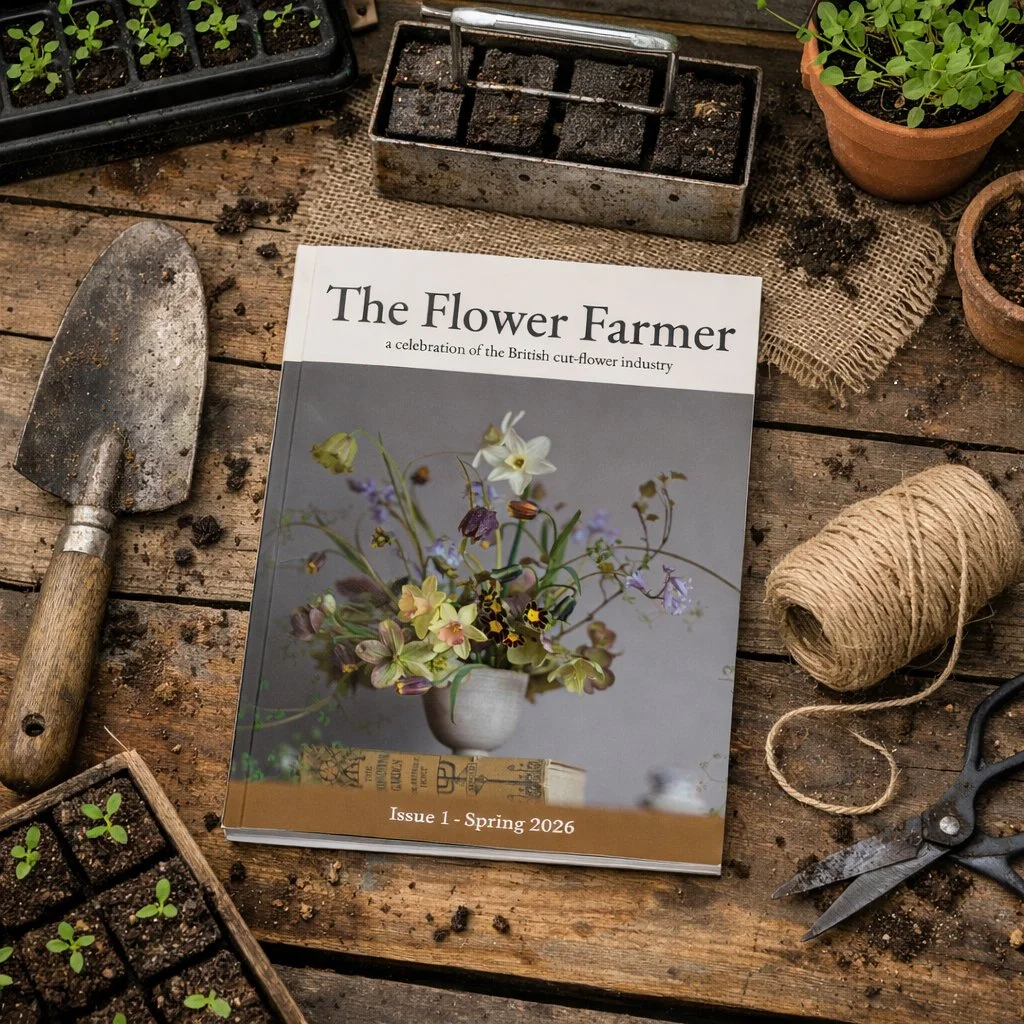
In conversation with Sofie, founder of The Flower Farmer magazine
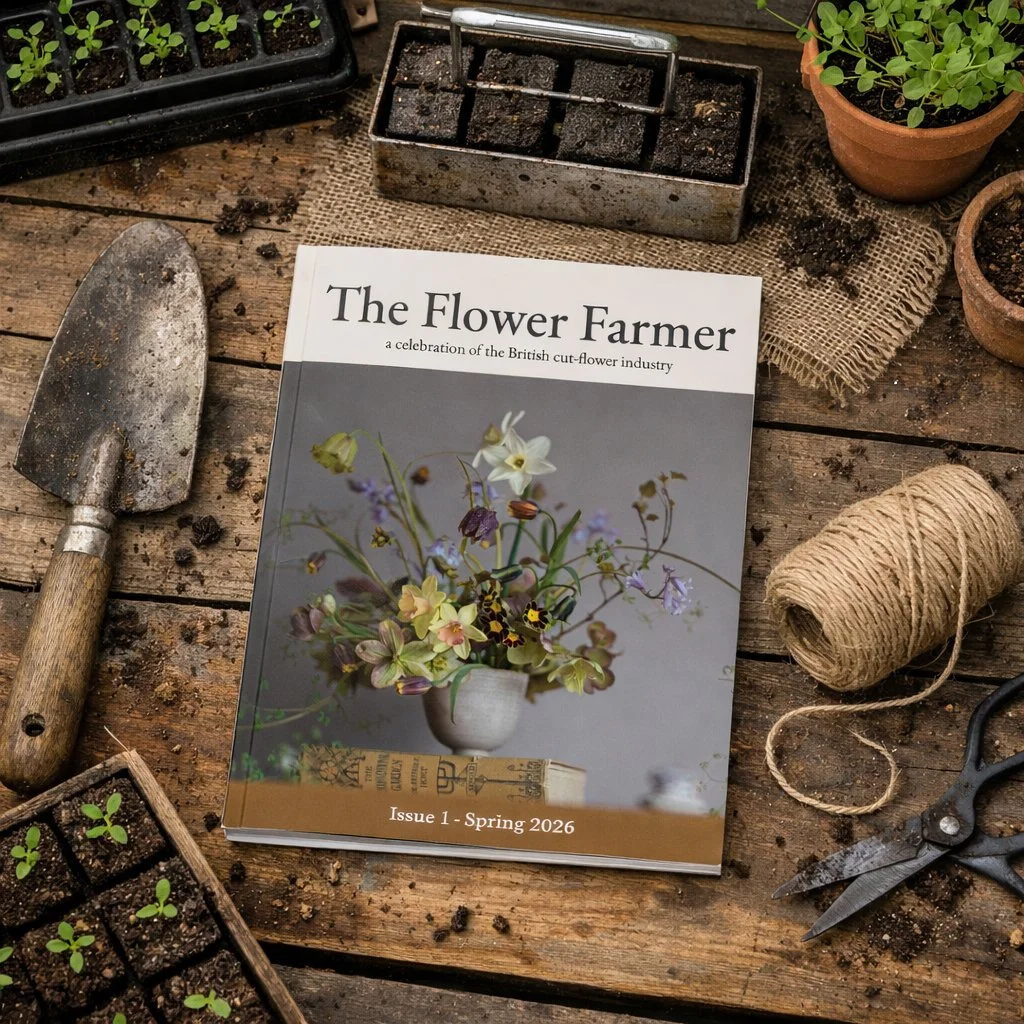
This March, A new magazine is being launched aimed at Flower famers. We asked Editor Sofie about why it’s been set up and what the plans are for it.
Can you tell us a little about yourself, the magazine, and where you’re based?
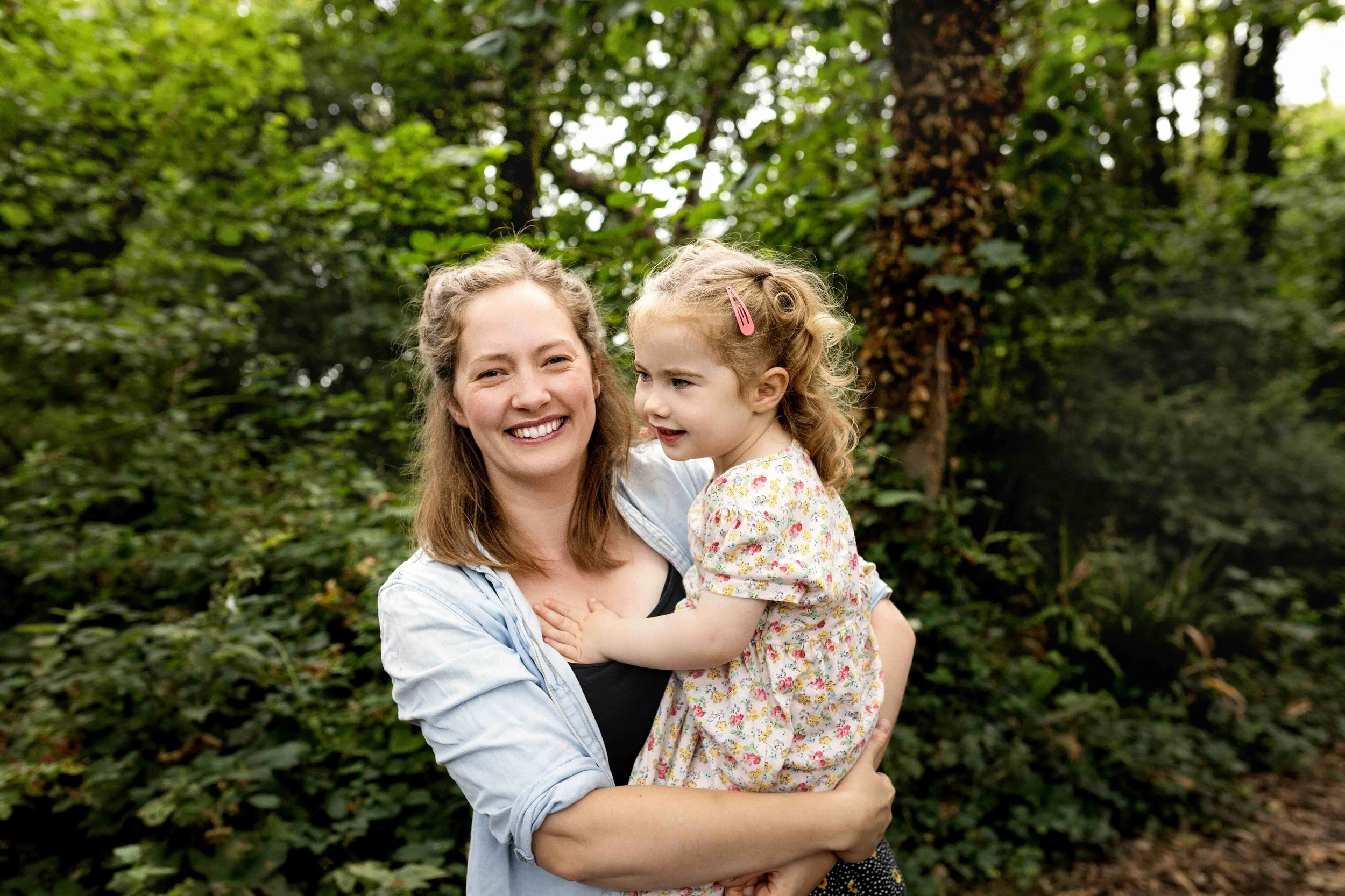
Hello! My name is Sofie and I’m the editor and founder of The Flower Farmer magazine. I also run a flower farm in Worthing on the south coast, growing flowers from our garden.
I used to rent a one-acre field from a local farmer, but life changed – we had children and moved house – and now the ‘farm’ is tiny: just 200 square metres. It suits us brilliantly while we have little children at home and has shown me just how much can be achieved in a small space.
Who’s your ideal customer? - let me know who you like working with and who you want to read the magazine
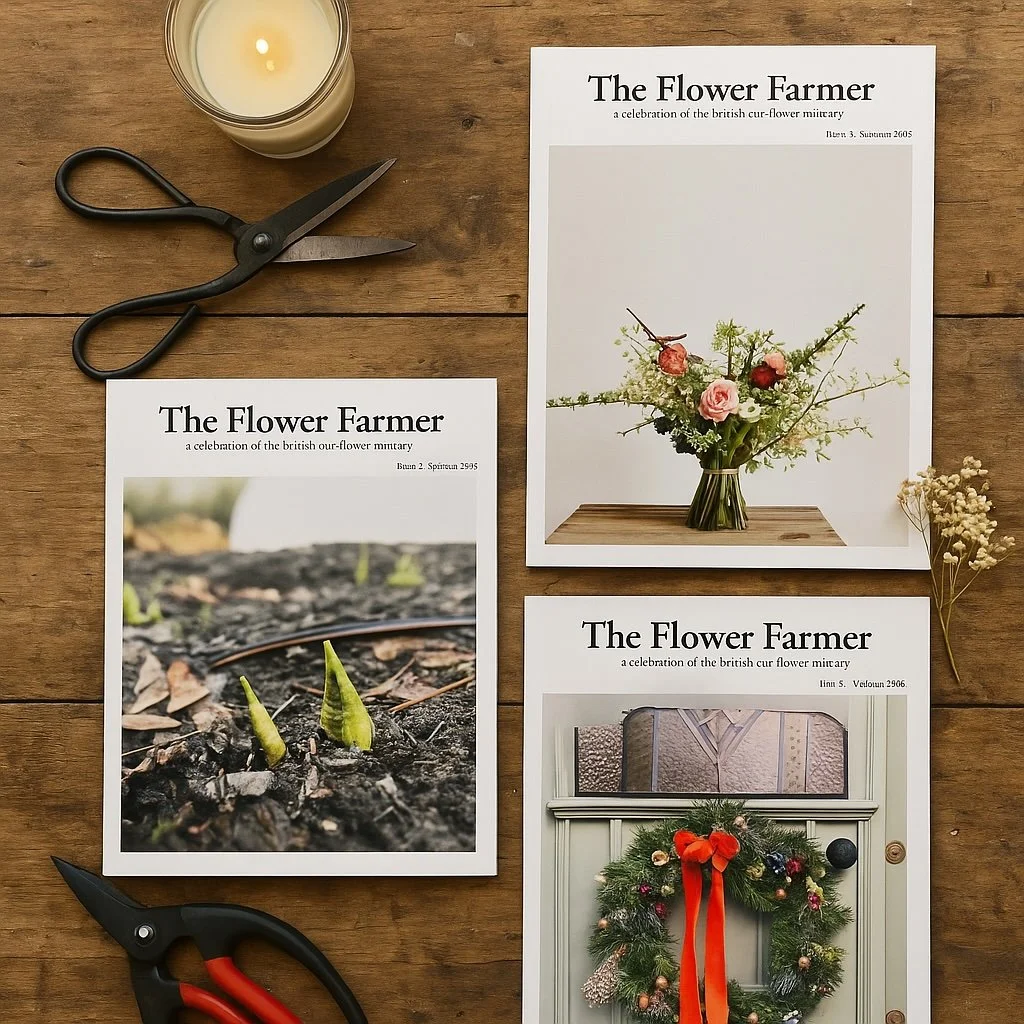
The new magazine is for anyone who grows, sells, uses or loves British-grown flowers. It is, simply put, a celebration of us as an industry - a platform where we can showcase our collective brilliance and share lots of ideas! The first issue has nearly 20 contributors including Georgie Newbery (Common Farm Flowers), Rachel Siegfried (Green & Gorgeous) and Roisin Taylor (Verde Flower Co), is 64 pages long and full to the brim with inspiration, motivation and comradeship for all who care about this industry.
What changes have you seen, and do you see coming ahead in British Flowers?
The future is very bright for British-grown flowers. I think we’re currently in a transitory process of getting our flowers more ‘out there’. Sustainability and provenance when it comes to flowers is not yet commonplace in the public eye, and it’s an exciting time to be part of the movement sharing the knowledge that beauty needn’t cost the Earth.
What are you most excited about in 2026
For me, I’m looking forward to connecting with lots of flower farmers and industry voices across the country as the magazine evolves, I’m looking forward to working with my own flowers again in just a few weeks, and I’m very excited about having little lisianthus seedlings to keep alive all the way through to harvest time!
‘Pre-orders for Issue 1 of the magazine close on 14th Feb 2026 - get your copy at www.theflowerfarmermagazine.co.uk and follow along the journey on Instagram @theflowerfarmermagazine’
What's available from flower farms in the UK in February
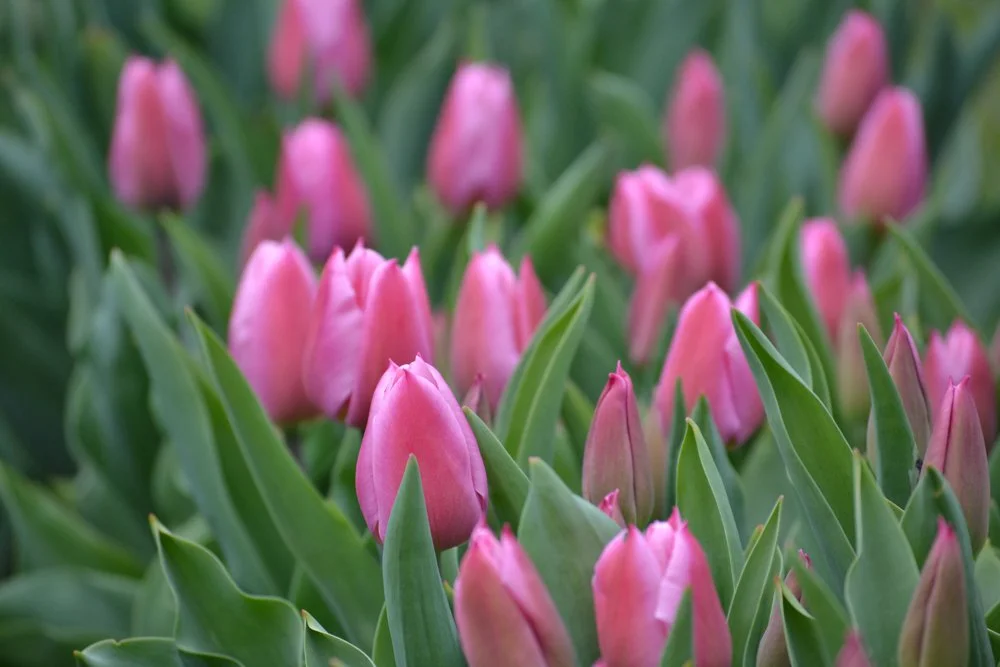
What’s available from UK flower farmers in February
While winter is still very much with us, inside greenhouses, there are buds and shoots, and the hardiest winter shrubs are still giving us stems outside

While storms sweep across the country, our growers are still producing stems from fields and glasshouses across the country.
Winter shrubs give foliage and scented flowers., and bulbs whether grown in the ground or hydroponically give us the colour.
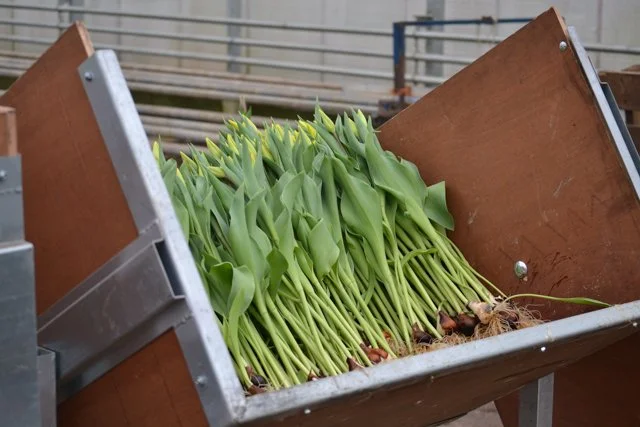
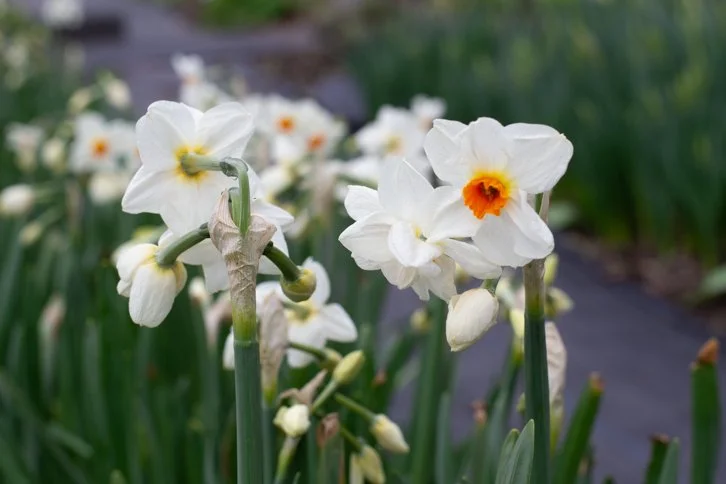
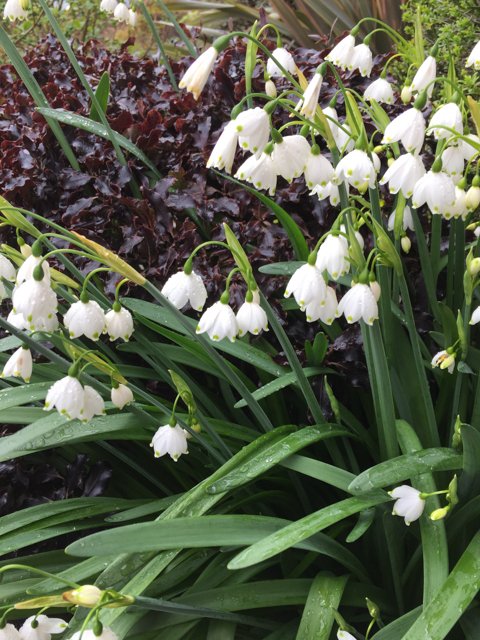
The key focal flowers are Glasshouse Ranunculus, Tulips and Alstroemerias. With Anemones, Iris, Leucojum and Snowdrops complimenting those colourful stems.
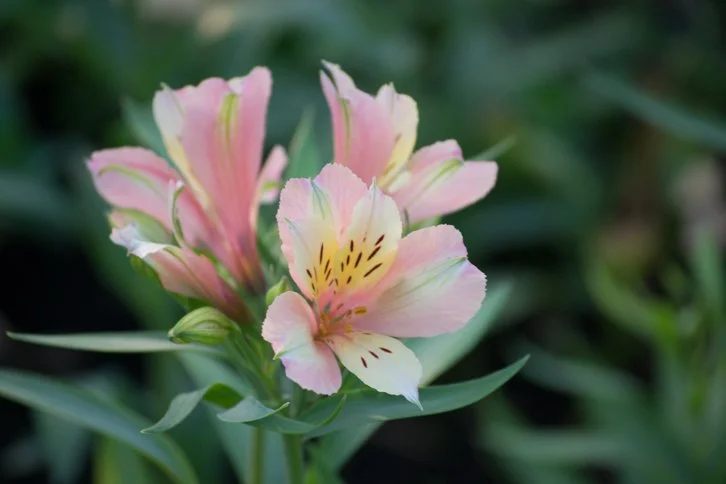
And outdoors:
Hellebores, Leucojum, Viburnum, Euphorbias, and foliage from Rosemary, Senicio, Eucalyptus, Choisya and Pittosporum.
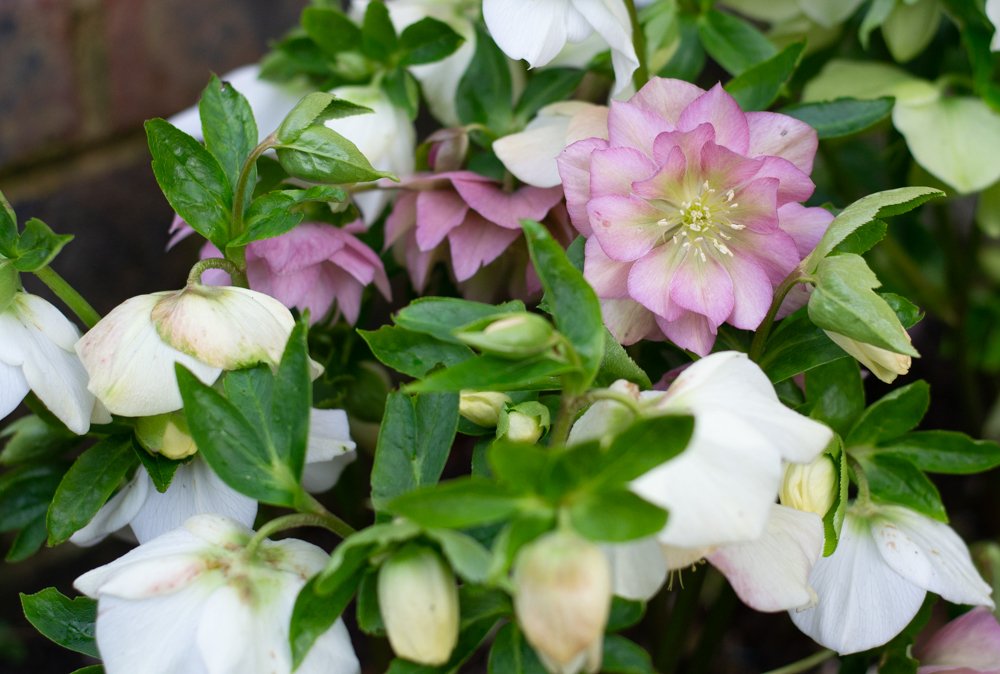
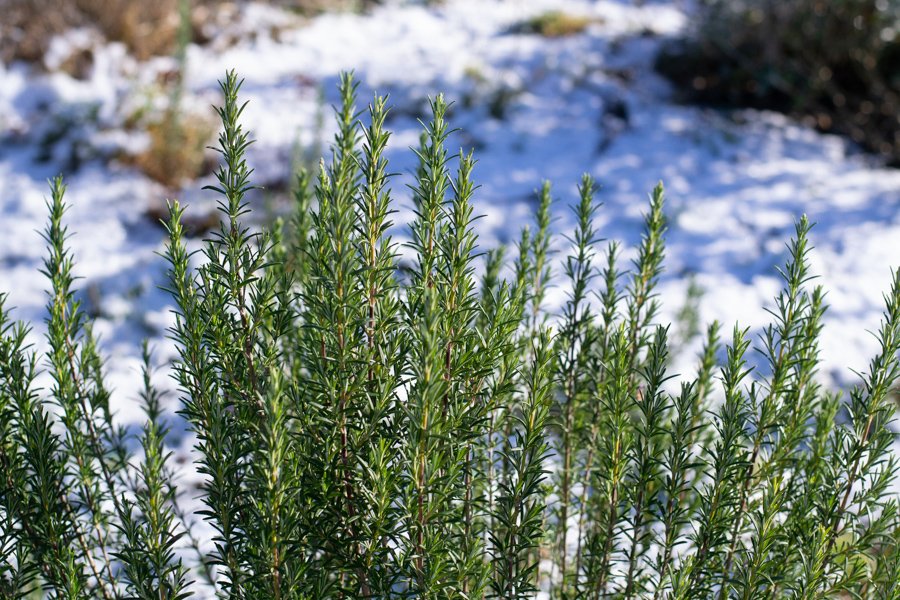
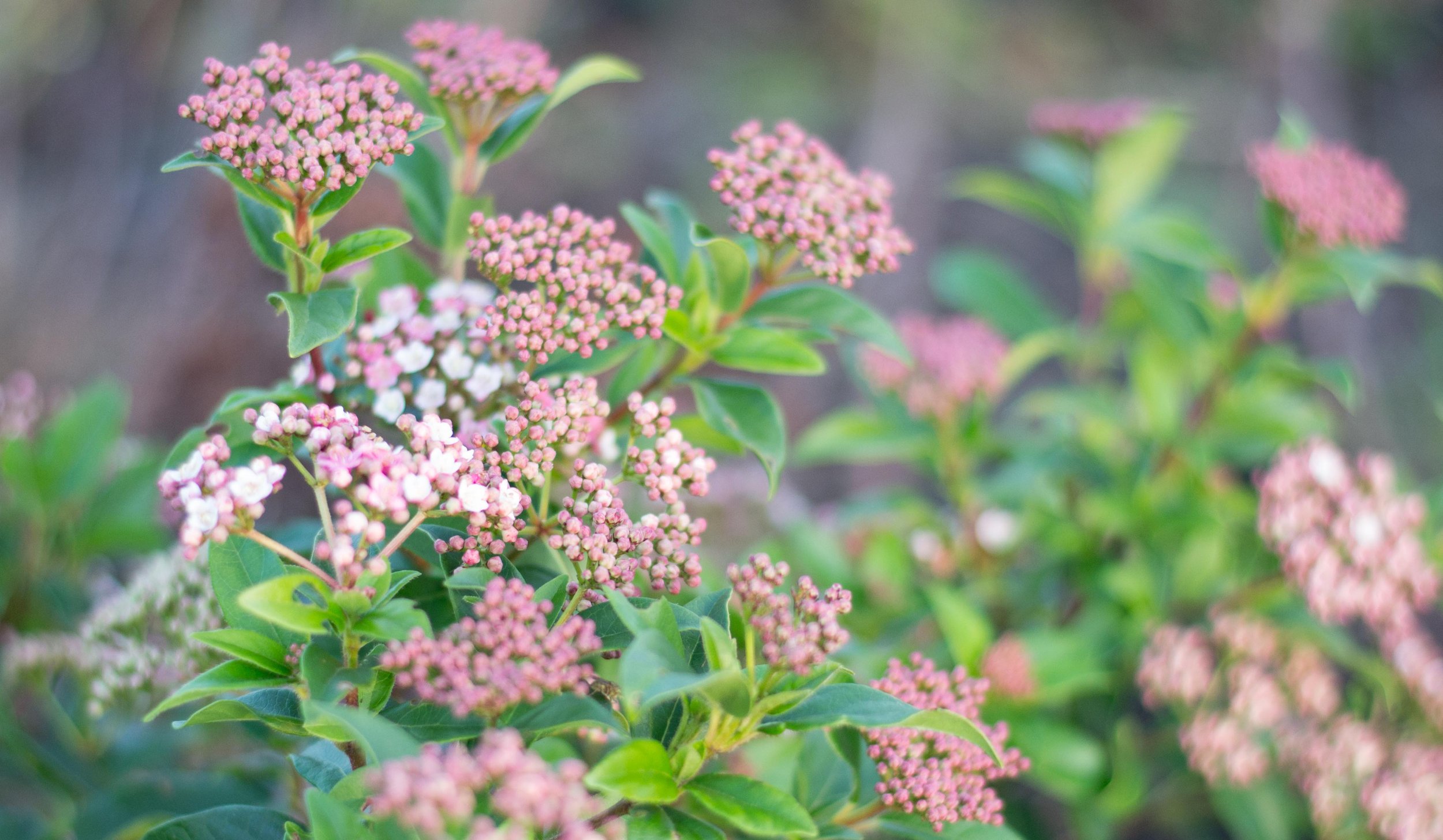
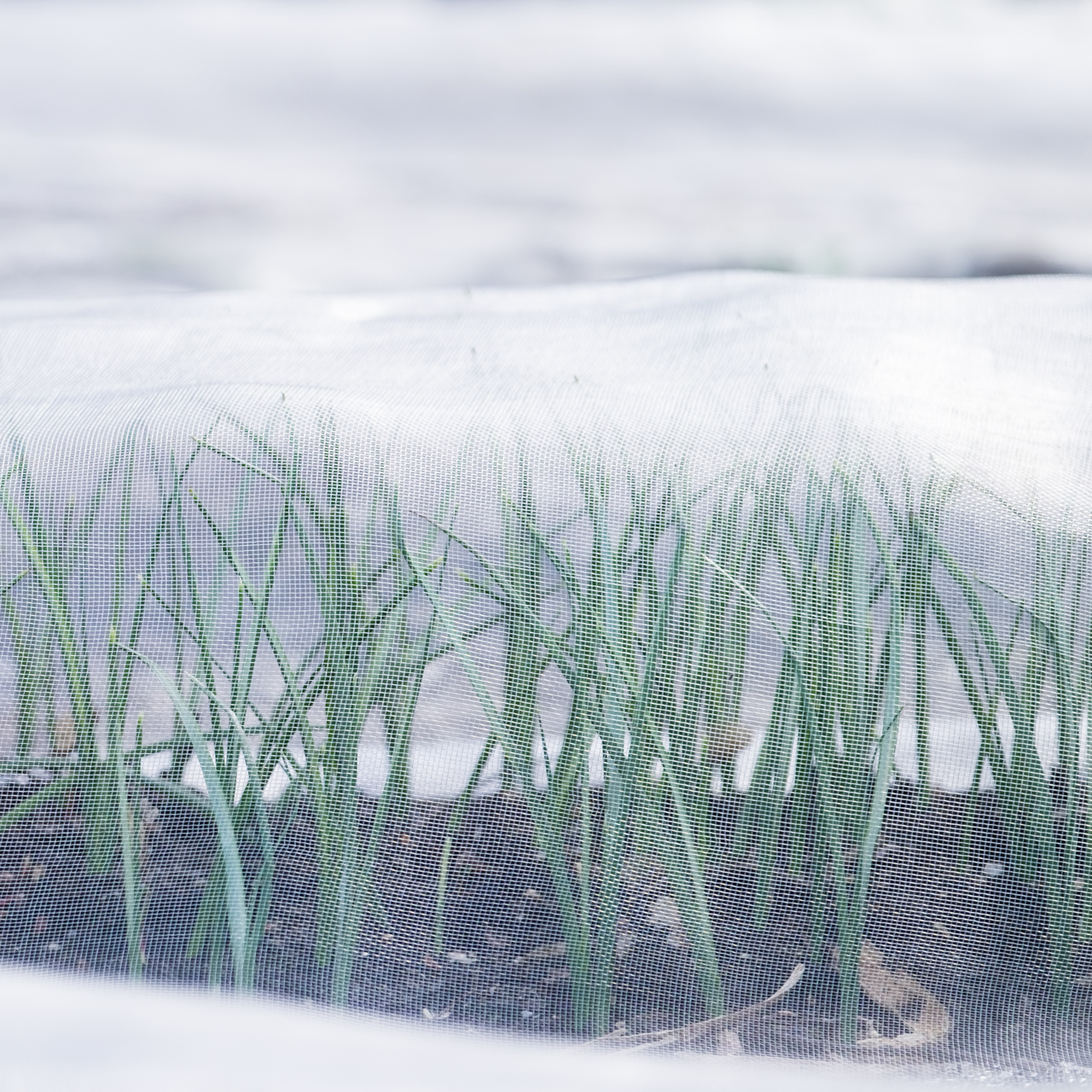
There are lots of crops coming up fast, currently protected by environmesh, so by March and with an early Mothering Sunday in 2026, growers are working hard on getting crops ready for then.
More bulbs, waiting to flower.
If you don’t currently have a supplier for your Winter flowers, do look at our Information post about finding your British flowers suppliers.
More information here.

Alstroemeria, all year round beauty
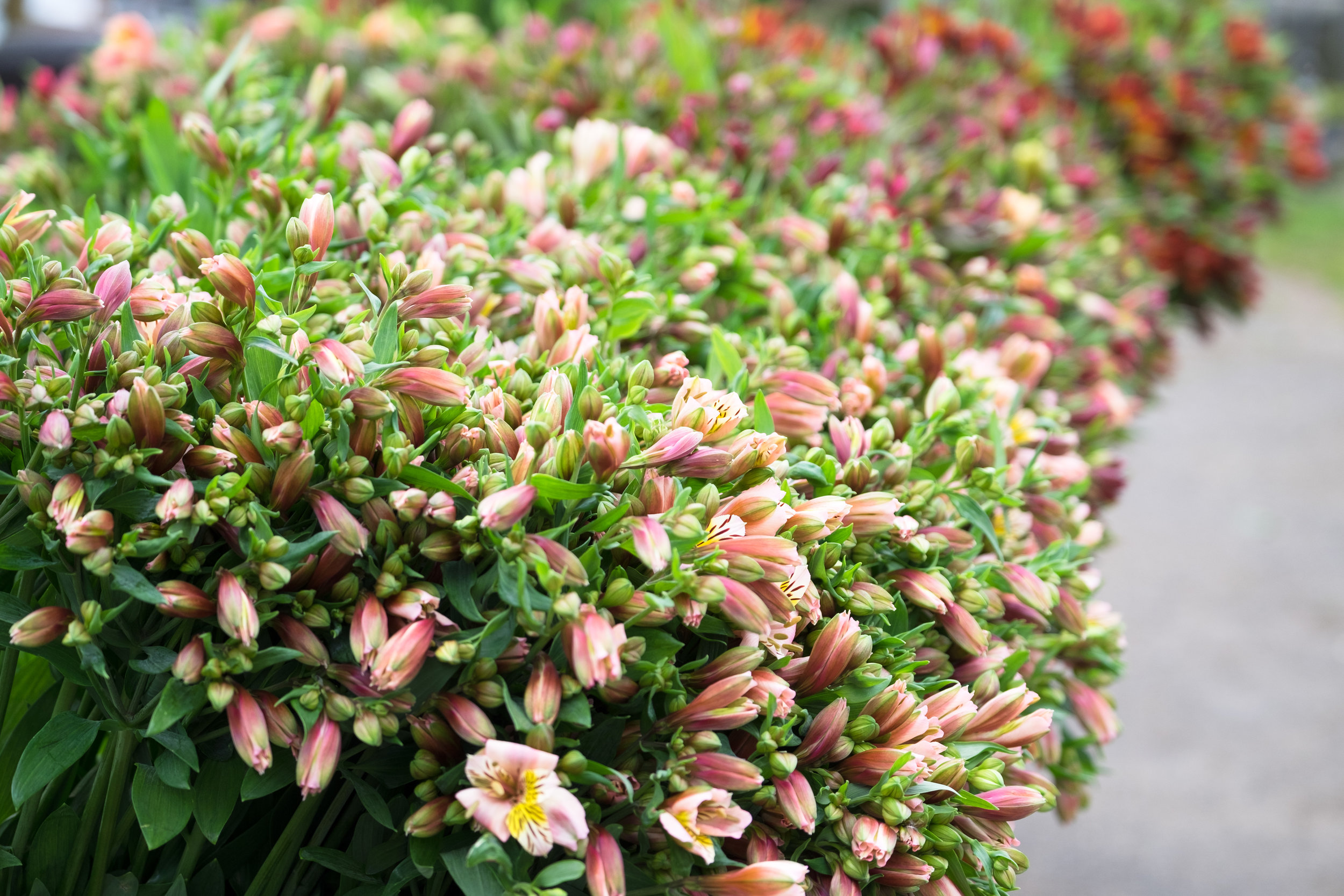
Alstroemeria, the Peruvian lily, is available from British growers all through the year, in a whole range of colours. From soft whites, creams and peaches, through to bright pinks, purples and almost brash oranges.
For that reason alone they should be part of any British flower florist's arsenal of front line flowers.
Alstroemeria, the Peruvian lily, is available from British growers all through the year, in a whole range of colours. From soft whites, creams and peaches, through to bright pinks, purples and almost brash oranges.
For that reason alone they should be part of any British flower florist's arsenal of front line flowers.
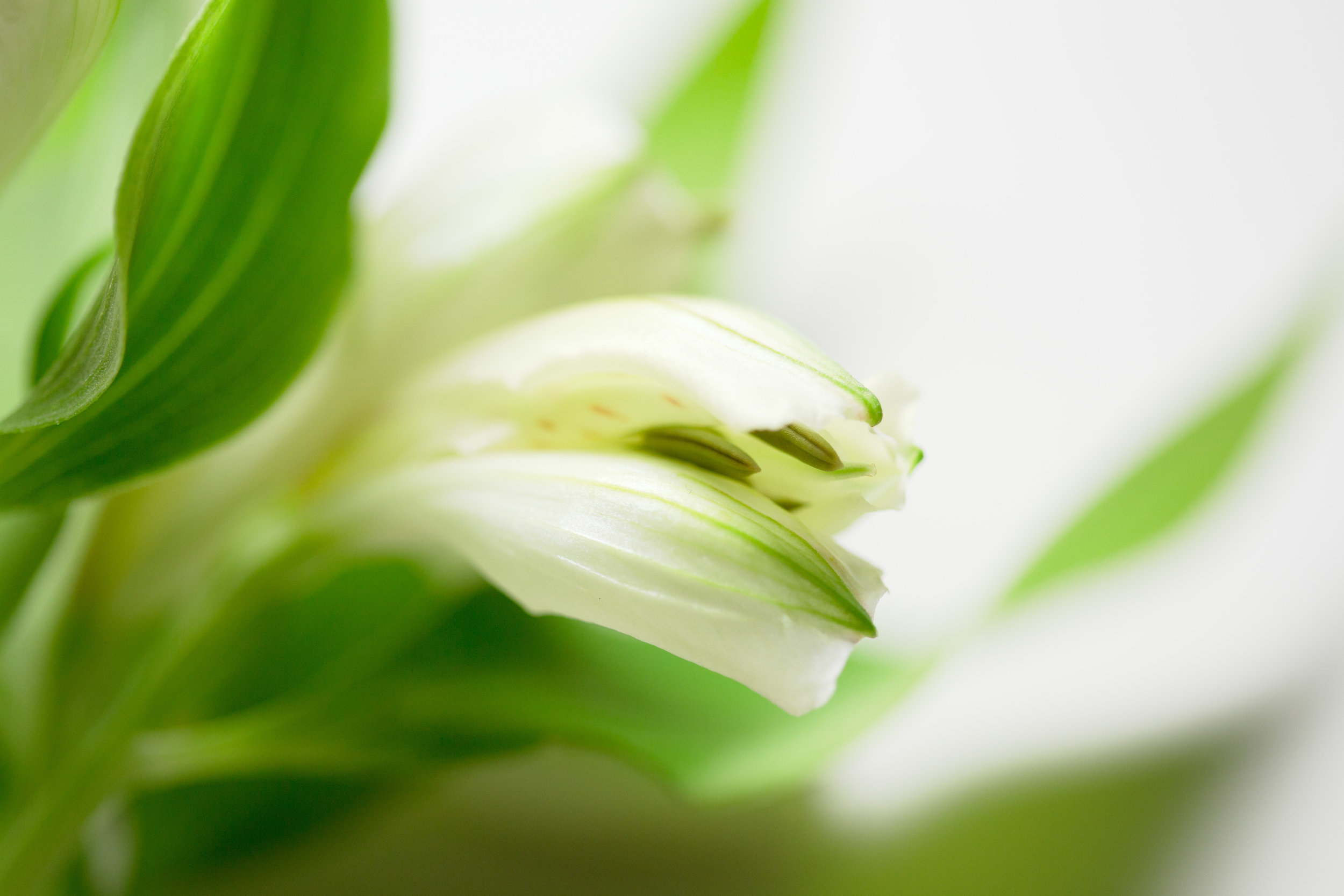
But when you take into account that they can happily travel out of water, that they have long straight stems, they can last in a vase for up to 3 weeks, and they are one of the best value flowers available, then it's amazing that they're not used more often.
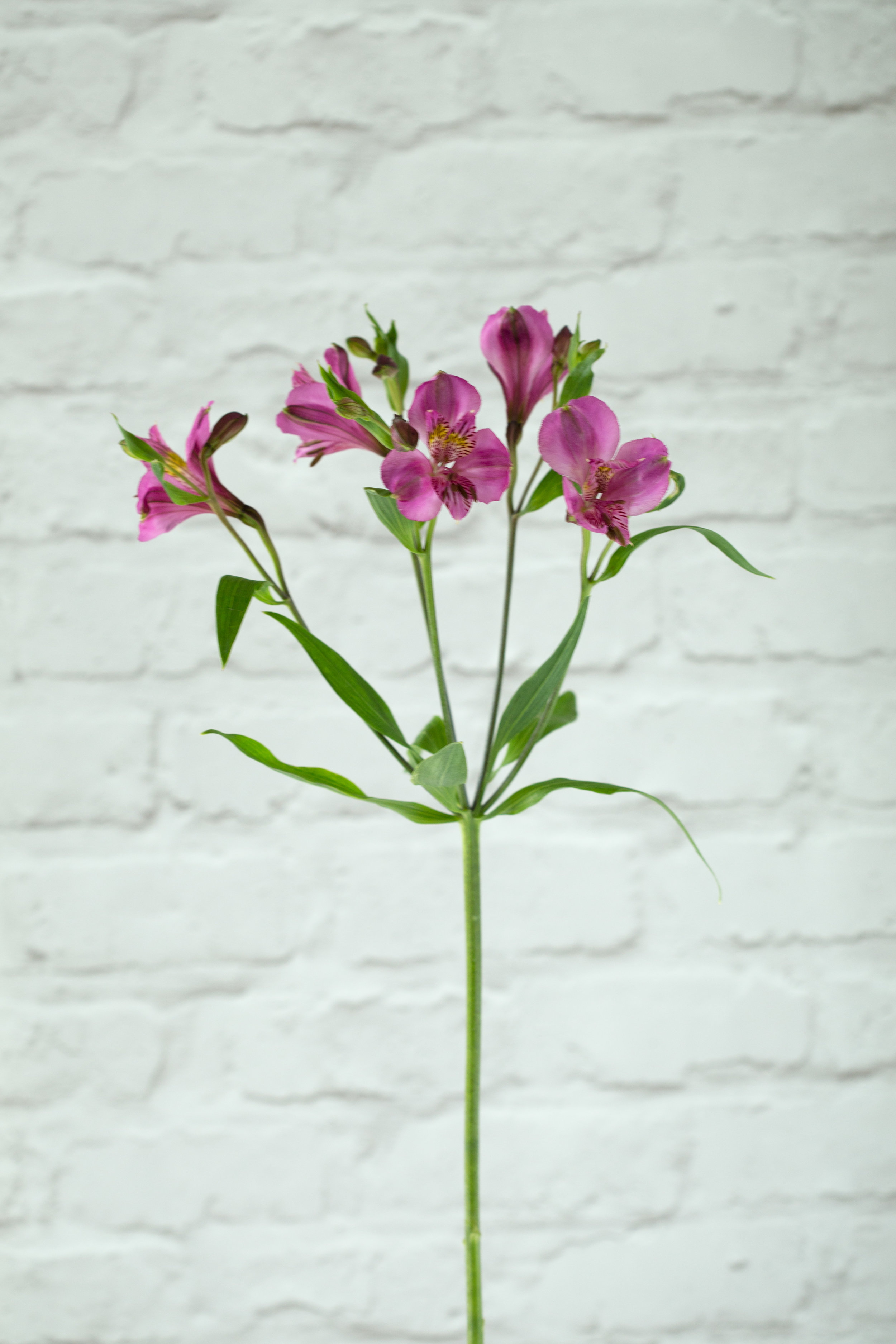
With up to 5 flowers per stem, Alstroemerias are good for giving plenty of body to a bouquet without bulking out the number of stems.
They are also still popular as a single bunch of flowers, as can be seen by the sales at supermarkets. However, British stems can easily be differentiated from overseas blooms, as those that have travelled are often picked before the buds have started to colour and open, so that they can be packed tighter. This means that there is often greater bud drop on imported Alstroemeria.

Pretty in Pink July flowers
We’re 3 years on now from when a lot of the photos were taken for the book. I wanted to know how relevant it was to what i’m growing now. So last week I toured the field spotting everything that was available that went with the July colour layouts from the book. This is what’s available in the middle of July for Pretty in pink July flower themes.

Variety names (where known)
Top Rose Eglantyne, Astrantia, Clary Sage Pink Sundae, Accrinolinum, Malope Blushing bride, Cornflower pinkie and classic romantic
Right hand side, Scented Pelargonium, Flowering Moroccon mint, Bells of Ireland, Centranthus Alba, Hordeum Jobatum, Linaria Canon Went, Larkspur,
Bottom, Scabious Rose, Phlox, Daucus Dara, Jasmine, Achillea, Berried Hypericum, Sweet Pea Anniversary,
Left hand side, Ammi Major, Veronicastrum, Veronica Pink Spires, Antirrhinum Pink trumpets, Antirrhinum Potomac Ivory, Oregano, Alstroemeria.

April shoot behind the scenes
Our April photoshoot was wedding bouquets made from tulips, ranunculus and the best of the rest from our April field . Here’s some of our behind the scenes photos.
A big part of The British Flowers Book is the photoshoots using seasonal flowers in “real life” situations that we as florists and flower farmers would supply flowers for .
For our book 2 photo shoots, we wanted to make sure we used only sustainable floristry methods, and readily available, in season flowers.
For April we created Wedding bouquets with mid month flowers, in 2 different colour ways. We tied them with Twool, and used a naturally dyed silk ribbon.
A Photoshoot is a great way of showing off floristry, without having to be under a time constraint of handing over a display to a customer, but that does mean that sometimes displays made specifically for photoshoots, might stretch the truth about what would be easily accessible, or are unrealistic in what would be included in a customer budget..We wanted to use real life models (us, the British flowers book team) and the actual flowers that are available., and also assess how long they lasted when the camera went away. Our behind the scenes photos show you how we actually got the shots, In April Charlotte Johnston and I dealt with freezing conditions and pouring rain to make images that would look like it was a bride coming out of the church clutching their bouquet.

Thank you to Charlotte for being game enough to get out her wedding dress, and still being able to fit into it!
It really wasn’t wedding day weather, so the behind the scenes photos show the coats, hats and boots that we used out of shot
We had planned to use our beautiful field backdrop, but the rain and dull spring meant that we have do change plan and use the greenhouse, with staging and plant trays moved out of the way.
The first colour way used the amazing copper image tulips, gems, wallflowers and salmone ranunculus. The scent from lilac and the white lion broom was beautiful, but ultimately we didn’t use these as the April images as we preferred the blue and white theme.


There are actually very few months in the year when naturally blue flowers are easy to come by, so we felt this fantastic bouquet made with Spanish bluebells, double tulips, ranunculus, Thalia narcissus, forget me nots and choisya as the foliage.


My thanks as ever go to Kerry Harrison, for capturing the photos that we needed.

The Industry innovation interview - Carole Patilla of Farewell Flowers
Carole Patilla of the Farewell flowers directory talks about their directory for florists, and how they are working to make funeral flowers plastic free.
In recent years, there has been a growing movement towards more sustainable floristry, and nowhere is this more poignant than in funeral flowers. The Farewell Flowers directory is at the forefront of this shift, offering a directory of florists who create beautiful, plastic-free, and compostable funeral arrangements. We spoke to Carole Patilla, co-founder of Farewell Flowers, to learn more about their mission and how the industry is changing.
Carole, can you introduce yourself and tell us what Farewell Flowers is all about?
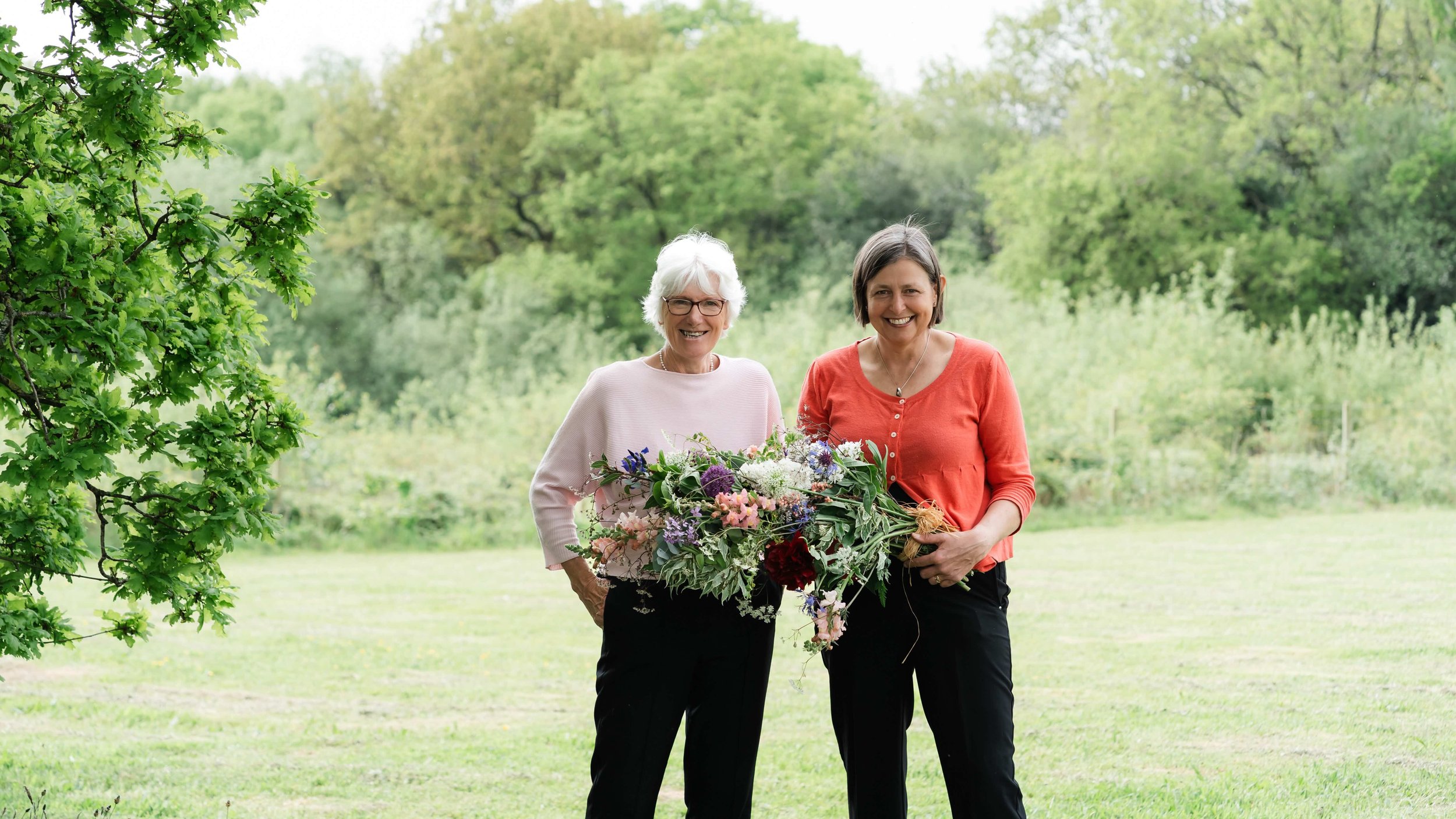
Farewell Flowers was launched in May 2024 by myself and Gill Hodgson to bring attention to plastic-free funeral flowers. We wanted to create a resource that makes it easier for people to find florists offering sustainable, compostable arrangements. The core of our initiative is the Farewell Flowers directory, which connects funeral directors and the public with florists who are committed to reducing waste and using British-grown flowers where possible.
What are the requirements for florists who join the directory?
We are aiming to attract high street florists and encourage them to start offering plastic-free and compostable options. To be part of the directory, a florist must:
Offer at least one funeral arrangement that is completely compostable and free from single-use plastic.
Have a dedicated page on their website for funeral flowers, clearly marking which options are sustainable.
Use some British-grown flowers in their designs.
Pic by Andrea Gilpin Photography @wild_meadow
Who are you hoping to connect with through this initiative?
Our goal is twofold: to educate the public on alternatives for funeral flowers and to work with funeral directors who want to offer environmentally responsible options. We’ve also been engaging with the Institute of Cemetery and Crematoria Managers, as they are responsible for handling the waste left behind by traditional floral tributes. Many people don’t realise that funeral flowers often contain floral foam and plastic, which have to be disposed of at a cost. By offering compostable arrangements, we reduce that burden.
How have you been raising awareness about sustainable funeral flowers?
We’ve attended public shows and events, including the Great Yorkshire Show, to get people talking about this topic and increase media coverage, This May we are going to be showing the public funeral flowers at The Chelsea Flower show. We also run educational photoshoots, creating inspiring imagery to showcase what is possible with seasonal, biodegradable arrangements.
What changes have you seen in funeral floristry over the past six years?
There’s been a definite shift towards locally grown flowers and personalisation. More people want funeral flowers that reflect the life of their loved one—whether that’s incorporating blooms from their garden or using colours and flowers with personal significance. We’ve also seen a growing awareness of sustainability, with many florists embracing foam-free mechanics and natural materials.

Early May Farewell flowers at Clandon Wood Natural Burial Ground.
What trends do you predict for funeral flowers next year?
I think we’ll see more ‘shareable’ funeral flowers—arrangements designed so family members can take a piece home, rather than a single large tribute. Seasonal flowers will continue to gain popularity, with favourites like peonies making their way into funeral work. Interestingly, yellow roses, once a wedding favourite, are now being requested more often for funeral arrangements.
Do you have any advice for families choosing funeral flowers?
Think beyond colour themes—consider the season, the person’s favourite flowers, or even their hobbies. If they were a gardener or loved nature, why not choose an arrangement that reflects that? The more personal the tribute, the more meaningful it becomes.
With 170 florists already signed up nationwide, Farewell Flowers is helping to reshape the way we think about funeral floristry. By choosing sustainable options, we can honour our loved ones while caring for the planet at the same time.

Carole and Gill can be found at Farewell flowers or @farewellflowers

March shoot behind the scenes
Our March photoshoot for book 2 was tables cape for a party, with early season bulbs and blossom in bottles and jars . Here’s some of our behind the scenes photos.
A big part of The British Flowers Book is the photoshoots using seasonal flowers in “real life” situations that we as florists and flower farmers would supply flowers for .
For our book 2 photo shoots, we wanted to make sure we used only sustainable floristry methods, and readily available, in season flowers.
For March we created a party table scape with glass bottles and jars of different heights and shapes, so we could use all the best of the early season stems, even if there were only smaller numbers if each type.
A Photoshoot is a great way of showing off floristry, without having to be under a time constraint of handing over a display to a customer, but that does mean that sometimes displays made specifically for photoshoots, might stretch the truth about what would be easily accessible, or are unrealistic in what would be included in a customer budget.. We wanted to use real life models (us, the British flowers book team) and the actual flowers that are available., and also assess how long they lasted when the camera went away. Our behind the scenes photos show you how we actually got the shots, In March we went to our local Surrey Hills Biodynamic vineyard - Albury Vineyard and used their tasting room for our table scape, and the bare vines as a backdrop to create an outside scene.

We started off by placing the party table in the middle of the room, but the photos had glare from the large picture windows looking out over the vineyard
We also had the lines of the black window frames interupptting our bottle displays.
when we moved the table to the back of the room, the flowers could really shine.


We then moved outside and were treated to a glass of their pink fizz, which helped our displays and laughter levels considerably.


My thanks as ever go to Kerry Harrison, for capturing the photos that we needed.


What's available from flower farms in the UK in March
What’s available from the flowers farms and wholesalers of the UK in March
March is the month for narcissus, alstroemerias, tulips, ranunculus, anemones and muscari available from our British wholesalers, with Foliage still available but coming to the end of it’s season.

Tulips
Our smaller growers will be busy seed sowing, but their polytunnels may be producing anemone, hellebores, ranunculus and the first tulips, with bulbs like narcissus, hyacinths, frittallaria uva vulpis, and muscari flowering in protected areas. Field shrubs are starting to produce blooms, especially from stems that can be forced, like ribes, kerria and forsythia, and some blossom. This is the month were the South / North divide is likely to be the largest, as sheltered areas can be weeks ahead of colder more exposed climes.


Spring blossom also starts in March, with early plum, prunus, magnolia and camellias giving plenty of flowers and supportive stems


There is still foliage around, but as the growing season starts, lots of these will become too soft to pick so make use of Pittosporum, Eucalyptus, Rosemary and Senecio, and the remaining pussy willow and cornus.
For your March flowers, choose one of these British Flowers wholesalers, or search Flowers from the Farm, or your search engine for growers nearer to you.
Smith and Munson , Flower by Clowance, Evolve Flowers Wholesale, BJ Richards, Real Flower company trade Crosslands Alstroemerias

The Grower interview - Wendy Paul at Organic Blooms
Wendy Paul and Jo Wright at Organic Blooms in South Gloucestershire. An Organic flower farm and Social Enterprise growing on 9 acres.
Tell us a little about yourself and where you're based.
I’m Wendy Paul, and along with Jo Wright, I run Organic Blooms in South Gloucestershire. We grow seasonal flowers on nine acres, with five polytunnels to extend our growing season. Jo and I have been working together for 16 years, and over time, we’ve developed our business so that we can now supply Abel & Cole and are now delivering into Flowervision. Alongside our courses and flowers for gifts.
What makes us unique is that we are a social enterprise, meaning we offer training and work experience to people facing barriers to employment. Our trainees help with many of the processes on the farm, making Organic Blooms a truly special place to grow flowers.
What is your main selling season? Do you sell anything out of season?
We start selling by March, thanks to our polytunnels, and continue right up to Christmas. We’re always looking at ways to extend the season, and the next big thing for us is foliage—it’s in massive demand.

Wendy (l) and Jo (R) in one of their polytunnels.
Who is your ideal customer?
We primarily sell wholesale to the market, including Flowervision. One of the advantages of working with them is that we can simply tell them what we’re bringing in tomorrow, without worrying about specific colours. They also take surplus, which helps reduce waste.
It works well for us because florists get to see and assess quality firsthand, and we can focus on growing rather than chasing individual orders.
What changes have you seen in the last six years since The British Flowers Book was published?
The biggest shift is that consumers are driving the demand for British flowers, and in turn, florists are following. More florists are actively looking for locally grown flowers because their customers are asking for them.
At the same time, it’s becoming harder to compete with the cost of imported flowers, which remain expensive but widely available.
We’ve also seen a shift in how florists work—there are now more studio florists and fewer high street shops, changing how flowers are bought and sold.
One thing that hasn’t changed? Pastel colours are still a favourite!

What do you think customers are going to love next year?
Pastels will continue to be popular, so we’re growing plenty of them but we’re expanding our work with Flowervision, particularly putting our flowers into mixed market buckets with a good range of what we grow, to make British-grown flowers even more accessible to florists.
Find out more about Organic Blooms Here, or follow Wendy and Jo on Instagram @organicblooms


The Grower interview - Cel Robertson of Forever Green Flower Company
Cel Robertson grows in Norfolk for florists on her productive acre field.
Tell us a little about yourself and where you're based.
I’m Cel Robertson, and I run Forever Green Flower Company, based in Norfolk. I started growing seasonal flowers in 2014 on a one-acre rented field, focusing on high-quality British-grown stems for florists and events. I now also have a bulb and seed business which I run with my husband Robert, to supply gardeners and growers with high quality varieties of seeds for cutting.
What is your main selling season? Do you sell anything out of season?
Our main selling season runs from April to the end of October. Out of season, we offer a small selection of dried flowers and evergreens, including eucalyptus and pittosporum. The quieter season for the flowers is when most gardeners and growers are looking to plan their bulbs and seeds for the year ahead, so our other side of the business is perfect for then.
Are you looking to expand?
Yes! I’m actively looking for a larger site to increase production and meet growing demand, and i’m optimistic about the future of selling British flowers to florists. Plus we are working with our seed suppliers across Europe to find varieties that we love for growing that we think others will like too.

Who is your ideal customer?
I love working with local high street florists who are committed to using British flowers. They typically buy twice a week and really value the quality and seasonality of what we grow. I also work with event florists, who place large, regular orders—sometimes 800–1,000 stems a week. Our minimum order is £50.
What changes have you seen in the last six years since The British Flowers Book was published?
There have been some interesting shifts. Florists are less focused on sustainability than before—it’s more about quality and price. International pressures have led many florists to seek out alternative suppliers, sometimes looking for cheaper options.
At the same time, there’s a growing commercial interest in local flowers. Flowervision Norwich, for example, is pushing locally grown flowers, marketing them as English-grown—though not necessarily crediting individual growers.
On the retail side, DIY wedding customers are increasingly seeking out sustainable, hyper-local flowers, making them a key part of their buying decisions.

What do you think customers are going to love this year?
Cosmos will still be a favourite, but we’re seeing a shift towards more lemon yellow tones, alongside the ever-popular white and blush. For later in the season, peach and lilac shades will be in high demand.
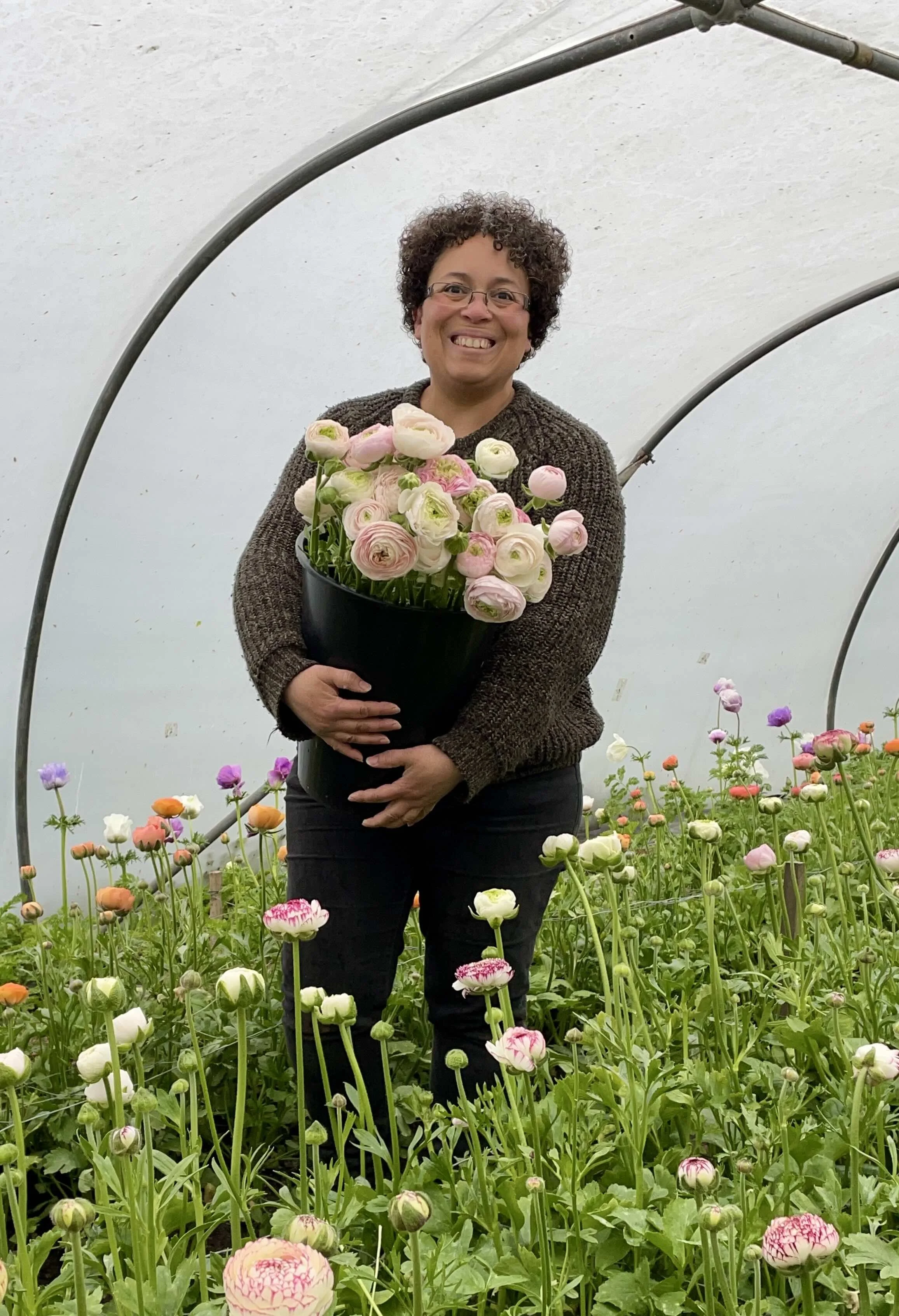
Cel with Ranunculus in the Polytunnel.
Find out more about Forever Green Flower Company Here, or follow Cel on Instagram @forevergreenflowerco or for seeds and bulbs details @forevergreen_seedbulbco